The Most Scenic Train Journey in Slovenia
The Antidote to Modern Transit
Modern passenger trains are sealed tubes of recycled air and artificial light. They move bodies from one commercial center to another with clinical efficiency. The Bohinj Railway is something else entirely. It is a rattling, unhurried machine that drags you straight through the rocky guts of the Julian Alps. People often ask me what the most beautiful train ride in Slovenia is, expecting directions to a sleek, glass-domed tourist express. The reality is much louder, smells faintly of diesel exhaust, and demands your full attention.
My dog, Baraba, understands this. He hates the sterile commuter lines but settles calmly on the worn seats of the regional trains here, resting his heavy chin on the open window frame. He catches the scent of damp pine and cold river water long before the valley opens up. Slovenia train travel is usually just a practical way to cross the country, but this specific 89-kilometre route from Jesenice to Nova Gorica is an event. It forces you to slow down and watch the geography change.
A Path Forged for an Empire
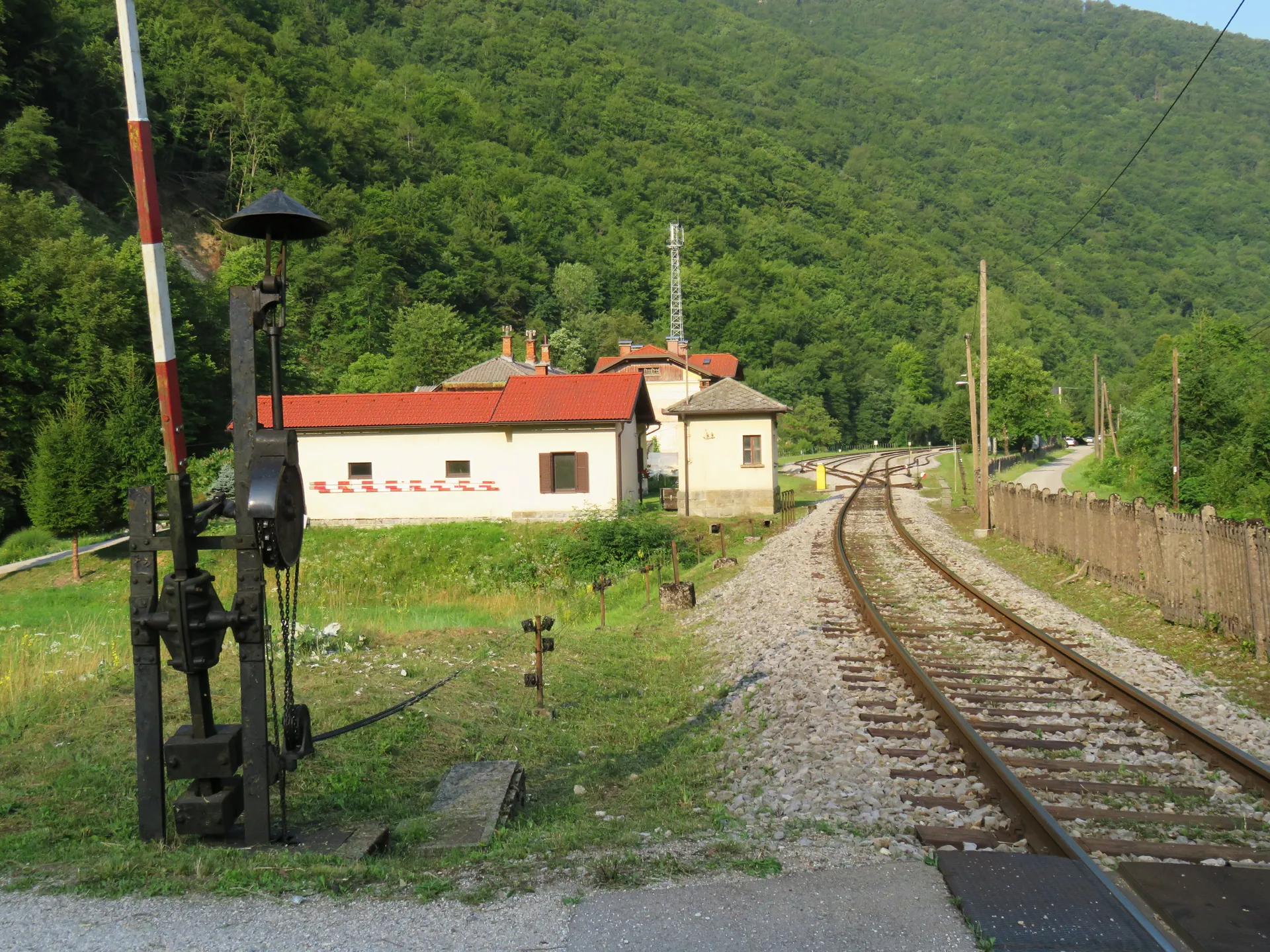
This rail line was not built for casual sightseeing. The Austro-Hungarian Empire needed a direct logistical artery connecting the capital of Vienna to the Adriatic port of Trieste. Between 1902 and 1906, over 14,000 workers chipped away at the limestone of the Julian Alps. Archduke Franz Ferdinand inaugurated the line in the summer of 1906. The political borders shifted repeatedly over the following century, yet the physical infrastructure remains intact.
They did not just build a railway; they forced a permanent negotiation between human ambition and unforgiving mountain rock.
The engineering statistics are sobering. The single-track, non-electrified line passes through 28 tunnels and crosses 65 bridges. The most demanding section is the Bohinj Tunnel. At 6,327 meters, it is the second-longest railway tunnel in the country, carved directly beneath Mount Kobla. The air temperature drops noticeably the moment the train enters the dark. When you emerge on the other side, the alpine weather often shifts completely. The skies over Mount Kobla change moods faster than a stubborn local elder denied his morning coffee.
Stone Arches and River Gorges
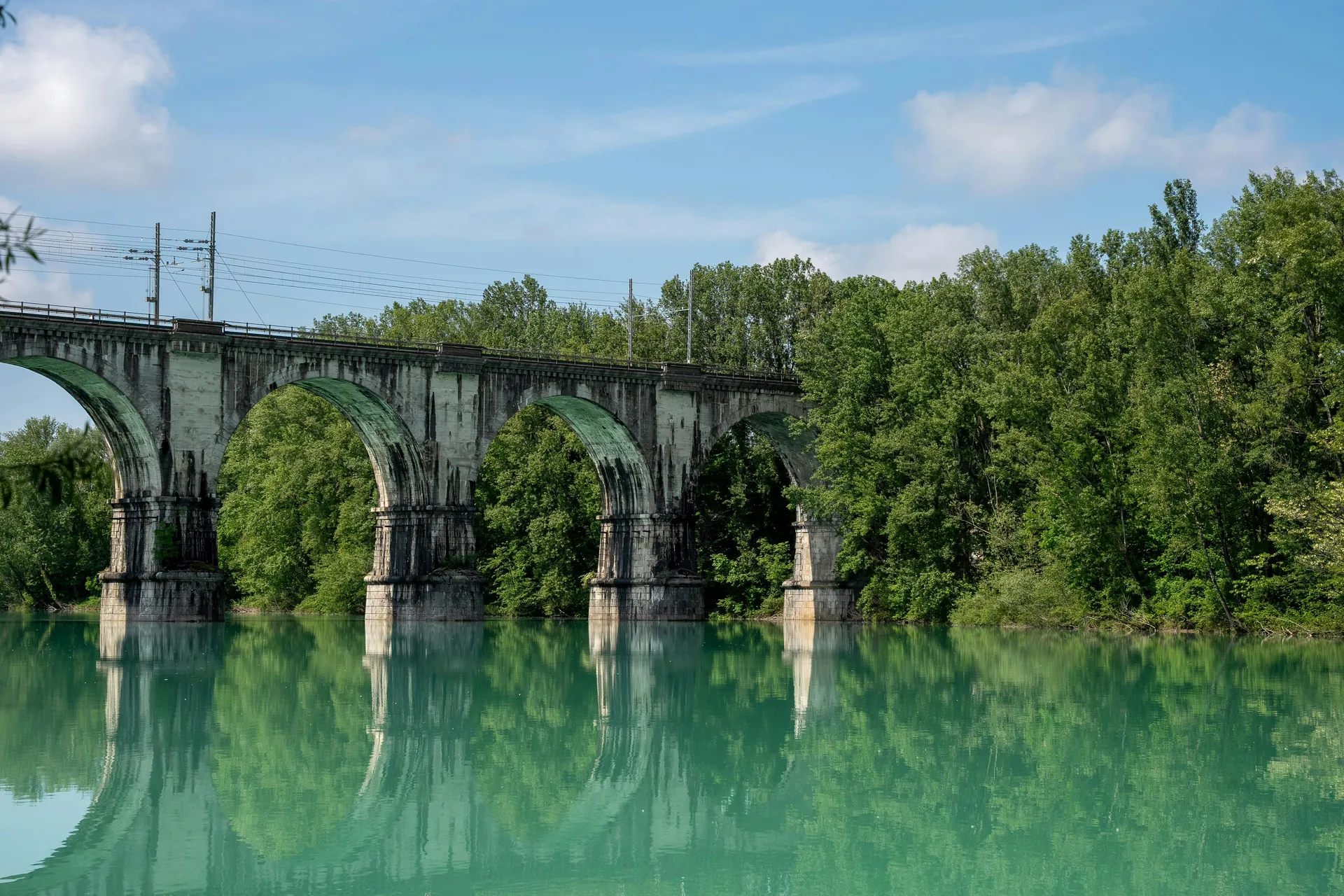
The descent toward the Mediterranean border brings the route’s most photographed structure. The Solkan Bridge spans the Soča River near Nova Gorica. It is the world’s largest stone arch railway bridge. The central arch spans 85 meters. Watching the heavy diesel train crawl over the pale stone structure, with the unnaturally bright turquoise water flowing below, is a stark visual contrast.
What You See
The journey south begins near the wide alpine basin of Lake Bled. The track soon narrows as it enters the rugged Bača Gorge. Steep forest walls press close to the windows. Eventually, the landscape softens into the wider Soča Valley, where the climate grows noticeably warmer and the architecture shifts toward Italian influences.
How to Capture It
Photography on this route requires timing. Many of the older passenger cars have windows that pull down completely. If you are travelling south toward Nova Gorica, find a seat on the right side of the carriage. This position gives you an unobstructed line of sight down into the river gorges and prevents you from staring directly into the cliff faces.
Choosing Your Carriage
You have three distinct ways to experience the Bohinj Railway, depending on your schedule and mode of transport.
| Service Type | Frequency | Description |
|---|---|---|
| Regular Passenger | Daily (6-7 times) | Standard diesel trains from the 1970s. Cheap, reliable, and entirely unpretentious. |
| Motorail (Avtovlak) | Daily (Seasonal variations) | Flatbed train cars that carry road vehicles through the Bohinj Tunnel. |
| Museum Train | Summer Weekends | A restored steam locomotive with costumed conductors. Requires advance booking. |
The Mountain Shortcut
Driving over the Julian Alps takes time and severely tests your brake pads. The Avtovlak, or Motorail, is a practical solution. It operates primarily between Bohinjska Bistrica, Podbrdo, and Most na Soči. You drive your car, van, or motorhome directly onto the flatbed carriage. You then sit in your vehicle as the train carries you through the darkness of the mountain.
This service cuts out over thirty minutes of exhausting hairpin turns. There are physical limitations. Vehicles cannot exceed 3 meters in height and 2.4 meters in width. You can check the current seasonal timetable directly on the Official Slovenian Railways portal before planning your driving route.
Steam and Nostalgia
During the summer months, the national railway operates a Museum Train. A heavy, coal-fired steam locomotive pulls restored wooden carriages along the same track. Staff punch tickets wearing early 20th-century uniforms. The soot blows through the open windows and settles on your clothes. It is an excellent, immersive ride, though it moves slower than the regular passenger service.
Where to Disembark
You do not have to ride the line from end to end. The route has 17 stops, many of them tiny stations with a single platform and a local stationmaster. Bohinjska Bistrica is your primary exit for exploring the high mountains. From here, you can easily access Lake Bohinj. Travelers constantly ask if Lake Bohinj is worth the detour from the more famous Lake Bled. It absolutely is. The water is colder, the shoreline is wilder, and the crowds are significantly thinner.
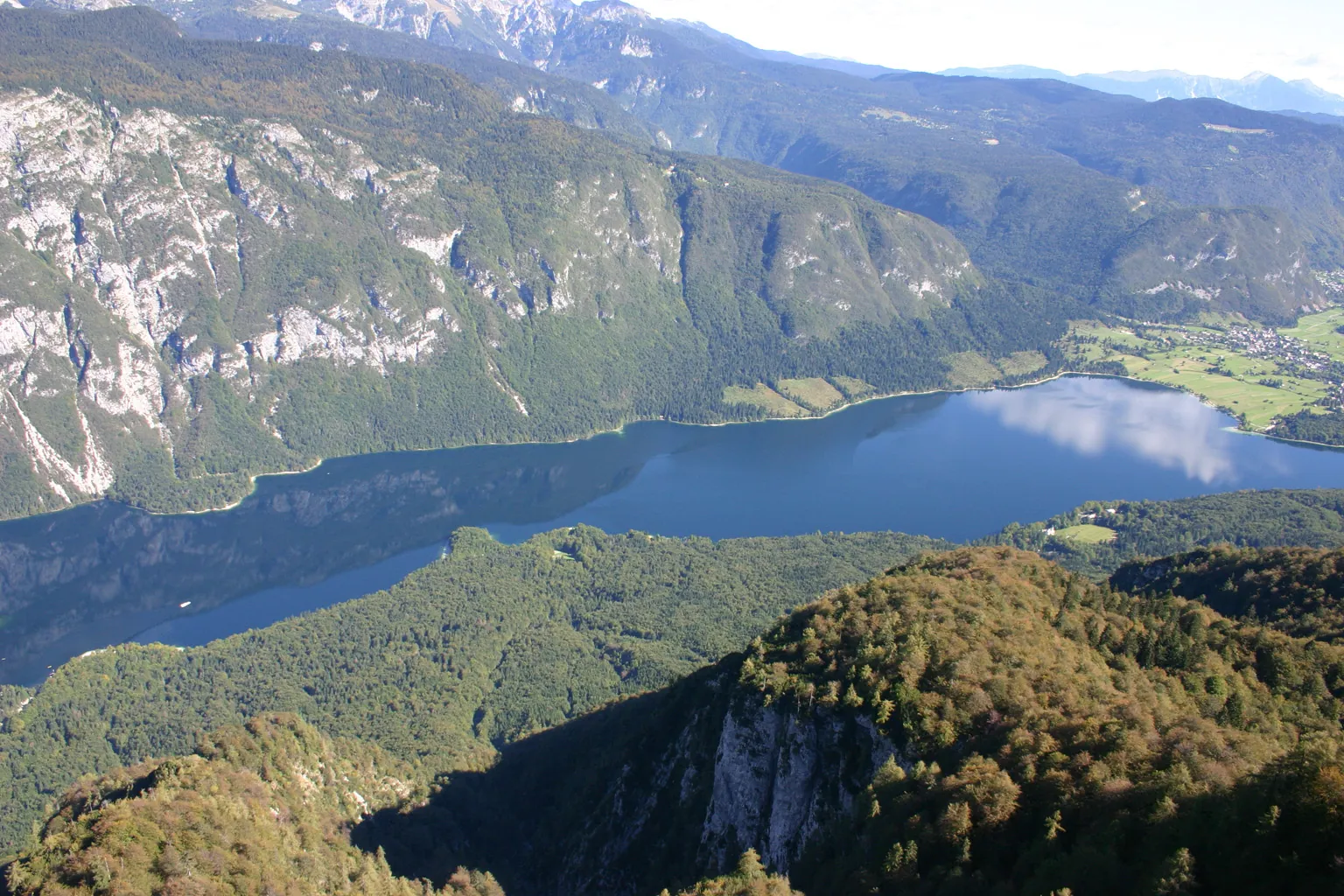
If you prefer river activities over still lakes, stay on the train until Most na Soči. The water here pools into a wide, impossibly green reservoir. It is a prime location for kayaking and paddleboarding. If you want to dive deeper into the protected zones without worrying about transport logistics, you can book a guided Triglav National Park excursion that manages the transfers for you.
Timetables and Station Logistics
Booking a seat on the regular passenger train is straightforward. You do not need to reserve months in advance. Many of the small village stations do not have active ticket counters. In these cases, you can buy a ticket directly from teh conductor once you board the train. You just need to know the platform you are waiting on.
For official trail maps and specific environmental regulations regarding the areas around the stations, consult the Triglav National Park Authority. Hikers stepping off at smaller stops like Podbrdo should be aware of the environment. People often worry about wildlife and ask if there are bears in Bohinj. The brown bear population is active in Slovenia, but they avoid the noisy railway corridors. Baraba occasionally sniffs the air defensively near the tree line, but encounters near the tracks are exceedingly rare.
Continuing to the Coast
The journey concludes in Nova Gorica, a town that literally straddles the Italian border. You can step out of the station and walk into the Italian city of Gorizia. From this Mediterranean climate, the Adriatic Sea is very close. If your itinerary allows, you can transition from the heavy alpine atmosphere to the salt air of Slovenia’s coastal towns.
The Bohinj Railway is a mechanical relic that forces an appreciation for the landscape. It is slow, loud, and entirely authentic. When you lean out the window and feel the cold air rush up from the river gorge, you understand exactly why a fast highway over the mountain could never compete.